



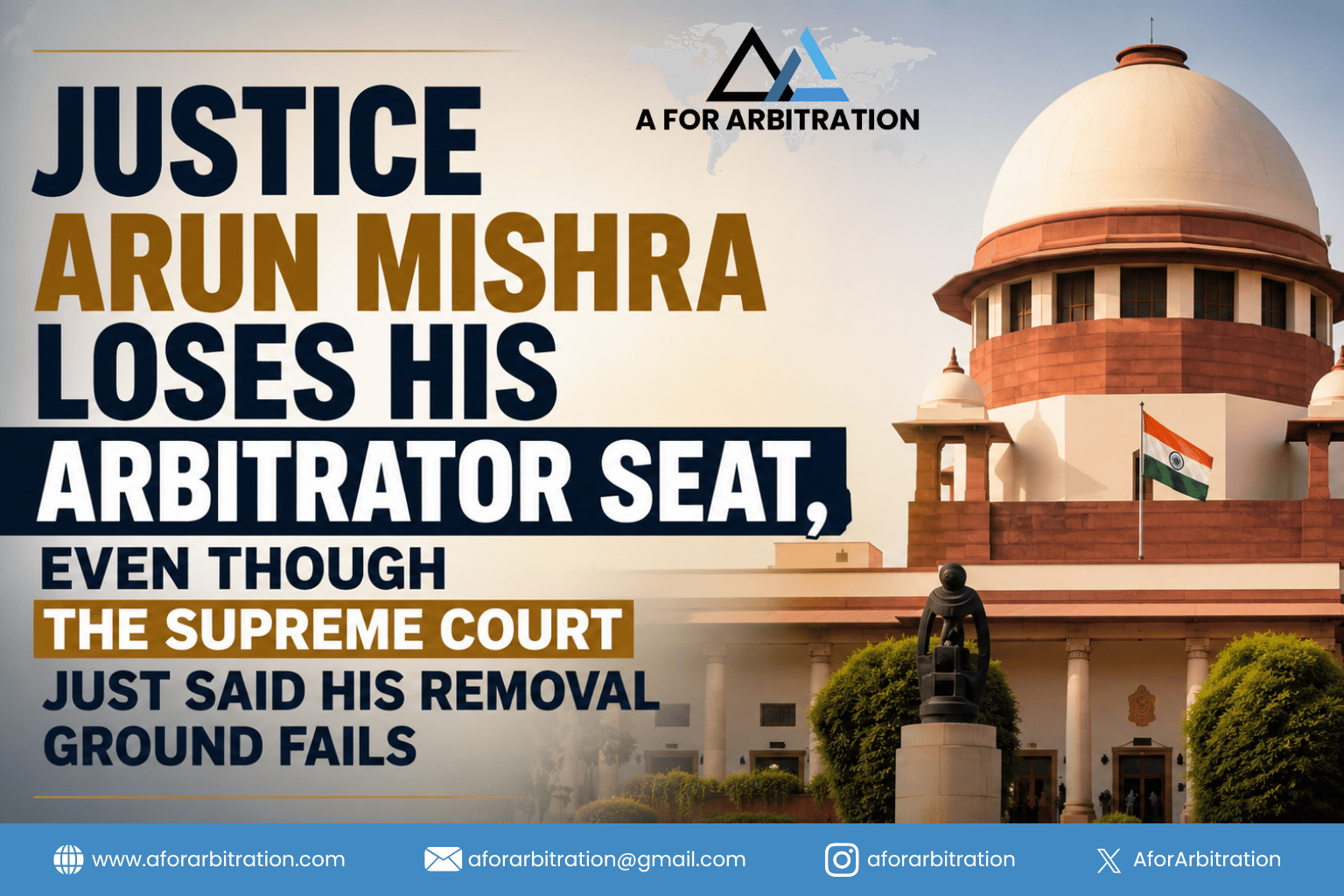
The Supreme Court has swapped out the arbitrator in an Adani-linked coal dispute, and it did so in a way that is more instructive than the swap itself.
On 3 August, a Bench of CJI Surya Kant and Justices Joymalya Bagchi and V Mohana replaced former Supreme Court judge Justice Arun Mishra as sole arbitrator between 𝑹𝒂𝒋𝒂𝒔𝒕𝒉𝒂𝒏 𝑹𝒂𝒋𝒚𝒂 𝑽𝒊𝒅𝒚𝒖𝒕 𝑼𝒕𝒑𝒂𝒅𝒂𝒏 𝑵𝒊𝒈𝒂𝒎 𝑳𝒊𝒎𝒊𝒕𝒆𝒅 (𝑹𝑹𝑽𝑼𝑵𝑳) 𝒂𝒏𝒅 𝑷𝒂𝒓𝒔𝒂 𝑲𝒆𝒏𝒕𝒆 𝑪𝒐𝒍𝒍𝒊𝒆𝒓𝒊𝒆𝒔 𝑳𝒊𝒎𝒊𝒕𝒆𝒅 (𝑷𝑲𝑪𝑳), a joint venture in which Adani Enterprises holds 74 per cent and RRVUNL the remaining 26. In his place, former Supreme Court judge Justice Sanjay Kishan Kaul, appointed with the consent of both sides.
The background
Justice Mishra's appointment traces to a 3 July order of the Rajasthan High Court, where the Acting Chief Justice named him sole arbitrator after noting that an arbitrator had already been appointed in a related dispute between the same parties. RRVUNL took that order to the Supreme Court, and its objection was specific: Justice Mishra, as a sitting Supreme Court judge, had been part of the 2019 Bench (with Justice MR Shah) that decided an earlier round of the same contractual dispute. That 2019 judgment restored PKCL's price escalation claim but upheld the rejection of its claims to roughly ₹78 crore in fixed costs and escrow funds, arising out of a 2015 arbitral award. For RRVUNL, this was the same contract, the same clause, the same parties, and therefore too close a prior involvement for comfort.
PKCL initially resisted the change. Its counsel argued that Justice Mishra was a court-appointed arbitrator, that the 2019 judgment was several years old, and that removing him on a petition he had no opportunity to respond to was procedurally unfair to a former judge who was not before the Court.
How the Bench got there
What makes the order worth reading closely is that the Supreme Court did not accept RRVUNL's ground. The order records, in terms, that the ground urged for changing the arbitrator was not legally sustainable. And yet the arbitrator changed anyway, because the Bench was focused less on the merits of the challenge and more on what happens downstream: an arbitrator whose neutrality is even arguably contestable is an arbitrator whose award invites a Section 34 challenge on exactly that ground, regardless of how the underlying objection is ultimately resolved. Rather than let that risk sit inside the arbitration and surface later, the Bench pushed the parties toward a consensual alternative. RRVUNL's senior counsel agreed, the parties put forward two names, left the choice to the Bench, and the Court settled on Justice Kaul. The Rajasthan High Court's order stands modified accordingly.
Why it matters
This is a case where the outcome and the reasoning point in different directions, and the reasoning is the part worth sitting with. The Court was explicit that RRVUNL had not made out a legal case for removal. If this had gone to a contested ruling, the challenge likely fails. But arbitration doesn't run on legal correctness alone; it runs on an award that survives Section 34. A court-appointed arbitrator with a prior adjudicatory footprint in the same contractual relationship, however defensible in law, is a standing invitation to a post-award challenge. The Supreme Court chose to close that door at the appointment stage rather than leave it open for the enforcement stage.
For parties navigating institutional or court-appointed arbitrator selection, particularly in disputes with a long litigation history and repeat-player relationships, this is a useful data point: a technically weak challenge to an arbitrator's independence can still be worth raising, and worth conceding to by consent, if it removes a live ground for delay later. Precaution, not precedent, decided this case.
𝘊𝘢𝘴𝘦 𝘥𝘦𝘵𝘢𝘪𝘭𝘴: 𝘚𝘓𝘗 (𝘊) 𝘕𝘰. 25773/2026, 𝘢𝘳𝘪𝘴𝘪𝘯𝘨 𝘧𝘳𝘰𝘮 𝘚𝘉 𝘈𝘙𝘉𝘈𝘗 𝘕𝘰. 125/2025 (𝘙𝘢𝘫𝘢𝘴𝘵𝘩𝘢𝘯 𝘏𝘪𝘨𝘩 𝘊𝘰𝘶𝘳𝘵, 𝘰𝘳𝘥𝘦𝘳 𝘥𝘢𝘵𝘦𝘥 3 𝘑𝘶𝘭𝘺 2026). 𝘍𝘰𝘳 𝘙𝘙𝘝𝘜𝘕𝘓: 𝘚𝘩𝘺𝘢𝘮 𝘋𝘪𝘷𝘢𝘯, 𝘚𝘳. 𝘈𝘥𝘷., 𝘸𝘪𝘵𝘩 𝘒𝘢𝘳𝘵𝘪𝘬 𝘚𝘦𝘵𝘩 𝘢𝘯𝘥 𝘵𝘦𝘢𝘮. 𝘍𝘰𝘳 𝘗𝘒𝘊𝘓: 𝘎𝘰𝘶𝘳𝘢𝘣 𝘉𝘢𝘯𝘦𝘳𝘫𝘦𝘦, 𝘚𝘳. 𝘈𝘥𝘷., 𝘸𝘪𝘵𝘩 𝘒𝘩𝘢𝘪𝘵𝘢𝘯 & 𝘊𝘰.